
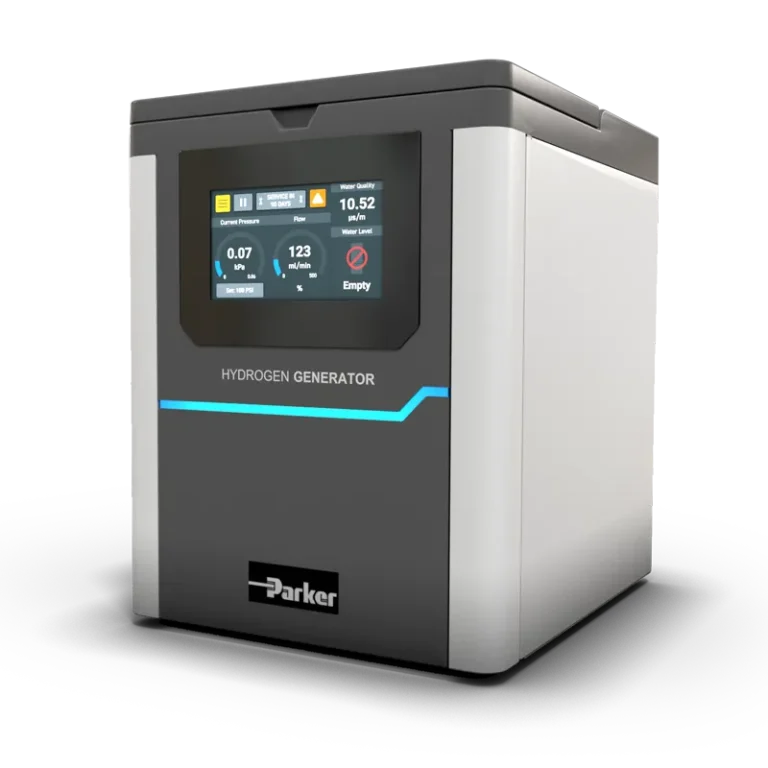
Parker ChromGas H2F Hydrogen Generator
Reliable Onsite Hydrogen for Gas Chromatography
For laboratories using hydrogen as a fuel gas for gas chromatography, a consistent supply of high-purity hydrogen is critical. The Parker ChromGas™ H2F Hydrogen Generator produces hydrogen onsite from deionized water and electricity, helping reduce dependence on high-pressure gas cylinders.
Designed for GC fuel gas applications, the H2F provides a continuous supply of high-purity hydrogen while maintaining a compact footprint and requiring minimal maintenance requirements.
Features and benefits
- Helps eliminate the need for high-pressure hydrogen cylinders in the workplace
- Simple to install and operate
- Compact, reliable design with minimal maintenance requirements
- Produces a continuous supply of 99.9995% pure hydrogen at pressures up to 100 psi (6.9 bar)
- Proven Proton Exchange Membrane (PEM) cell technology
- Three-year standard cell warranty
- Optional automatic water fill and remote networking capabilities
- Stackable with other Parker ChromGas™ products to conserve laboratory space
- Exceeds NFPA 50A and OSHA 1910.103 regulations
- Meets CSA, UL, CE and UKCA requirements
Generate the Hydrogen Your Lab Needs Onsite
The ChromGas H2F uses proven Proton Exchange Membrane (PEM) technology to generate high-purity hydrogen on demand. Advanced desiccant filtration helps keep the hydrogen dry and supports consistent detector performance.
Available in four flow capacities from 100 to 510 mL/min, the H2F can support multiple GC flame detectors depending on application requirements. It can also serve as a hydrogen source for collision gas in ICP-MS applications.
For laboratories looking to reduce cylinder handling while maintaining a dependable gas supply, the H2F provides a compact onsite alternative.
Find the Right Equipment for Your Application
Your hydrogen requirements depend on your instruments, required flow rate, operating pressure and the number of detectors the generator needs to support.
Air Energy can help you evaluate your application and identify the Parker gas generation equipment that best fits your laboratory requirements.