
Compressed Air Audit Services in New England
High compressed air costs, pressure instability, moisture and inefficient equipment can all affect production and system reliability. A detailed audit helps determine where those issues are coming from and how they should be addressed.
Air Energy connects facilities throughout Massachusetts and New England with N2O2’s compressed air audit expertise. Using real operating data from across the system, N2O2 identifies performance gaps, quantifies their impact and develops prioritized recommendations around the needs of the facility.
Understand What Is Affecting Your Compressed Air System
A compressed air audit evaluates more than individual compressor equipment. It looks at how air is generated, treated, stored, distributed and used throughout the facility.
An audit can help your team better understand:
- High compressed air operating costs
- Low or inconsistent system pressure
- Capacity concerns during production
- Inefficient compressor operation
- Suspected air leaks
- Moisture in compressed air lines
- Whether additional compressor capacity is actually needed
- Where compressed air is being used or lost
Air Energy works with N2O2 to coordinate the audit and help customers move from system findings to practical next steps.

Types of Compressed Air Audits
A complete compressed air system audit can include supply-side, demand-side, leak and dew point analysis. Each service can also be performed independently when there is a specific concern to investigate.
Supply-Side Audits
Evaluate how compressed air is generated, treated, stored, controlled and distributed.
Supply-side analysis can identify compressor efficiency issues, pressure instability, storage limitations, control problems, equipment sizing concerns and other conditions affecting system capacity and operating cost.
Demand-Side Audits
Understand how compressed air is being used throughout production.
Demand-side analysis can identify artificial demand, excessive consumption, high-demand applications and processes operating at more pressure or airflow than required.
Compressed Air Leak Audits
Locate and quantify compressed air loss throughout the facility.
Each identified leak is documented with a photograph, estimated leak rate and estimated annual cost so repairs can be prioritized by measurable impact.
Dew Point Audits
Evaluate moisture conditions and dryer performance across the compressed air system.
Dew point analysis helps identify moisture problem areas and determine whether compressed air quality is appropriate for the facility’s equipment and processes.
Benefits of a Compressed Air Audit
A compressed air audit shows how your system is performing, where air and energy are being lost, and which improvements should be prioritized.
It can help your facility:
- Reduce operating costs
- Improve pressure and system reliability
- Recover available capacity
- Improve compressor efficiency
- Identify moisture concerns
- Plan upgrades using prioritized recommendations and estimated savings
The result is a system-specific improvement plan based on measured operating data.
What Do You Get From a Compressed Air Audit?
The final report provides technical findings and financial information to support system planning and investment decisions.
Depending on the audit scope, the report may include:
- Executive summary and key findings
- Compressed air use and operating-cost breakdown
- Detailed engineering analysis, graphs and calculations
- Individual compressor efficiency compared with manufacturer specifications
- Estimated air leak losses
- Current versus proposed operating costs
- Recommendations prioritized by implementation timing
- Estimated equipment and installation costs
- Total estimated annual savings
- Updated compressor layout or system sketch
Recommendations may be organized by priority with recommended timeframes to complete.
Find and Quantify Compressed Air Leaks
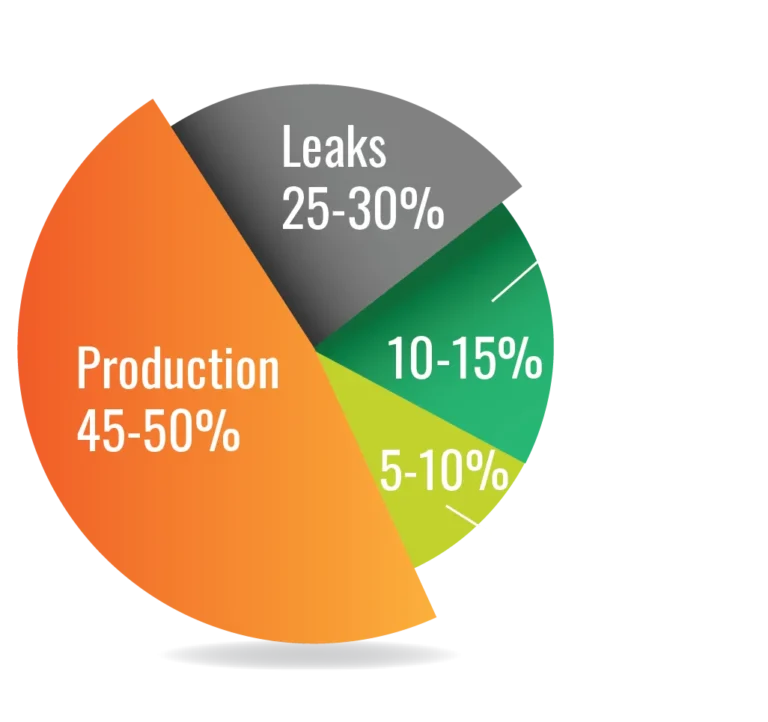
Compressed air leaks increase energy use, reduce available capacity and keep compressors running harder than necessary.
N2O2 uses ultrasonic leak detection to locate hidden leaks and documents each one with a photograph, estimated leak rate and annual cost.
This helps your team:
- See where air is being lost
- Prioritize the most costly leaks
- Recover system capacity
- Reduce unnecessary compressor runtime
How Air Energy and N2O2 Work Together
Air Energy serves as your local compressed air partner while N2O2 provides the specialized engineering analysis behind the audit.
Contact Air Energy
Tell our team what you are seeing in your compressed air system and what you want to better understand.
N2O2 Performs the Audit
N2O2 engineers collect and analyze system data under normal operating conditions and develop detailed findings and recommendations.
Review the Findings
The audit report identifies the conditions affecting system performance, estimated costs and opportunities for improvement.
Plan the Next Steps
We’ll help you review N2O2 findings and recommendations and determine the appropriate next steps.
Get a Clearer Picture of Your Compressed Air System Performance
Whether you are addressing high operating costs, pressure problems, air leaks, moisture or capacity concerns, Air Energy can help coordinate a compressed air audit based on your facility and operating conditions.